

The Alternative to Swimming Pools in Residential Communities
Some residential community swimming pools will remain closed this summer due to the appearance of covid19. Homeowner associations have encountered problems regarding management and capacity control to minimize the risk of contagion. Additionally, new regulations require constant disinfection of common use areas and maintaining social distancing inside community facilities.
Faced with this situation, many residents have decided to find a solution to beat the heat in another way, without having to miss out on a good, refreshing dip. That is why this year we have witnessed the installation of hundreds of small pools on terraces and private-use patios in many buildings across the country. However, there are many questions that users ask, such as how safe it is and what the legislation says about it.
Following a post we published, we have received some questions about this, so we want to clarify through this article all the doubts we can for your peace of mind, in addition to telling you about another possibility that you may not have considered in your homeowner association or with your property manager.
Swimming pools in residential communities: private use and safety
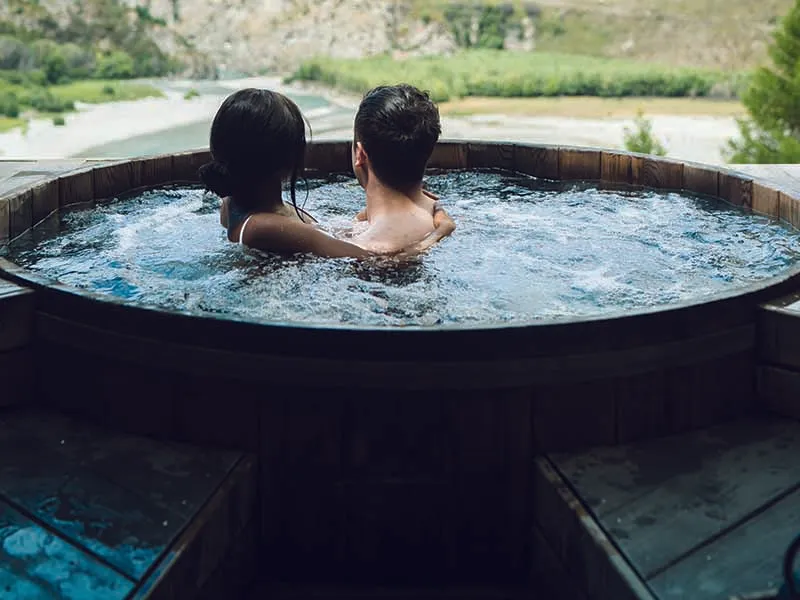
Private swimming pools in residential communities have generated a trend that can be dangerous or unsafe if certain aspects are not carefully considered. When we buy a portable or inflatable pool, as a general rule, we will see in the usage recommendations what the pool capacity is in liters, but there is no information available about weight capacity, floor structure, or any recommendation in that regard. Some users decide to consult with the seller, who may give an opinion or recommendation. But the truth is that the seller may be acting with the best of intentions, but is in no way qualified to determine whether the floor of our terrace or patio will withstand the weight of the pool once it is full.
The best option is to consult with a professional. An architect or a building surveyor should come to our home to determine what weight it could support, and how many liters our pool should be in case we can install one. This expert will tell us the exact spot to place the pool if appropriate, and can also consult the structural report of the building to know what weight the floor structure can bear. This report is usually available to residents from the construction company.
As a guideline, the average that such a structure can support is usually around 350kg per square meter. However, we should never rely on that figure, and should always consult with an expert. Otherwise, a tragic accident could occur as we have already seen. It is not worth taking the risk when there are qualified professionals to help and guide us.
Private pools in residential communities | Drowning hazard
In private pools within residential communities, there is a risk that few users tend to keep in mind due to their size, and that is drowning. Before explaining it, let us say that it is true that the height of private-use pools on terraces is usually not high. We have already mentioned that the average weight a building can support is 350 kilograms per square meter. Considering that one liter of water weighs one kilogram, a pool that fills up to 30 centimeters in height would already account for 300 kg, to which the weight of the structure and the person bathing must be added.
The problem is precisely that they are very small pools. We must not forget that this is not a toy, and whenever a child uses it, it must be under the constant supervision of an adult. Having such a low height creates a false sense of security regarding the danger or possibility of drowning. However, the World Health Organization states that many drownings occur in this type of pool and that in more than 70% of cases it is due to the lack of attention from an adult. In a pool, that risk is always present and should not be taken lightly.
About community pools: Private use legislation

When we think about swimming pools in residential communities in the private sphere, the other big question that concerns residents is regarding the law. What does the legislation say about setting up a private pool on a terrace or patio? Well, the answer is very brief and simple, and leaves no room for doubt.
We can save ourselves the consultation with a lawyer or administrator, as Spanish legislation says absolutely nothing specifically about the subject. The only thing we can find is that it does dictate that each square meter of a building’s floor structure must be capable of supporting a minimum of 200kg, taking into account the need for furniture and people. To this, it can be considered that architectural associations recommend leaving a safety margin of at least 100 or 150kg, which would give us a total of 350kg. However, at no point are pools mentioned.
However, we cannot evade our civil liability for said pool. In this way, it must be kept in mind that although the installation of a portable pool does not require any type of permission from the homeowner association, nor does it require an urban planning license, we are fully responsible for any damage it may cause to other residents. For this reason, in some cases it is advisable to extend the coverage of our home insurance.
Discover how we help swimming pools in residential communities
If the swimming pools in your residential communities have not opened this summer, you should tell your property managers about our app for managing and booking common areas. A fast, simple, and affordable solution.