

Elevator Use and Covid19: What Is the Risk of Contagion?
Elevators and covid19 are a combination that has become a controversial debate since the appearance of the disease. In homeowner communities, many residents wonder how safe it is to use their elevator. In extreme cases, some have requested their closure for safety, although with little success.
It is known that the virus has a high survival rate on surfaces such as metal and plastic. These two materials are the basic components of an elevator, so the fear and doubt are reasonable. Furthermore, it is worth noting that Spain is one of the countries with the highest number of elevators per capita in the world. A fact that has served to cause even more alarm. But we all ask ourselves the same question: what are the chances of getting infected by using the elevator?
Risks of covid19 contagion in residential community elevators
Using the elevator can pose a risk of contracting covid19. We must accept this fact before analyzing the precautionary and prevention measures we can take. It is not necessary to share the space with an infected person for virus transmission to occur. It is enough to come into contact with a previously contaminated surface. There is no scientific evidence or studies to support this, only some discussions among experts.
We must not forget that the virus is new and the entire scientific community is working with all its resources against the clock. An experiment has been conducted whose conclusion is that someone who gets into an elevator immediately after it has been used by an infected person who has been coughing is exposed to 25% of the viral load. This data implies that there is evidently a risk of contagion. And therefore, safety measures must be taken.
It is known that during the current pandemic there have already been reports of some contagion in elevators. However, it should be noted that the infected person was sharing the cabin (without wearing a mask) with an infected individual. This gives us an idea of the preventive measures to take, which we will discuss below. On the other hand, New York is the most affected city by Covid19 in the United States and the one with the most elevators. But the most striking fact is that Japan, where there are also many elevators per capita, has one of the lowest mortality rates. The difference is that the Japanese are very conscious about wearing masks.
The conclusion is that the risk of contagion in elevators without any measures exists and can be relatively high, although there are no scientific reports that support this fact.
Learn about prevention measures in elevators against covid19

If we want to use the elevator and minimize the risk of contracting covid19, we must strictly follow prevention measures. This means that we can continue to use them safely, as long as we do not relax the measures recommended by health authorities. First, it is recommended to always use the elevator individually, with the exception of users who live together.
On the other hand, wearing a mask is always recommended, regardless of whether you are traveling alone or not. As we have mentioned, the viral load in that small, enclosed, and unventilated space could be significant.
It is also recommended not to touch handrails or mirrors. And as far as possible, it is advised not to touch the buttons directly with your fingers.
Finally, it is important to wash your hands immediately after using the elevator, even if you have not touched anything. It is a habit that can prevent contagion in many different circumstances.
In the case of using a large elevator in which 2 or more people will travel, the recommendation remains not to use it if possible. Otherwise, in these cases, it is recommended to maintain the maximum possible social distance, of at least 1.5 meters.
Technology and the safe use of elevators against coronavirus
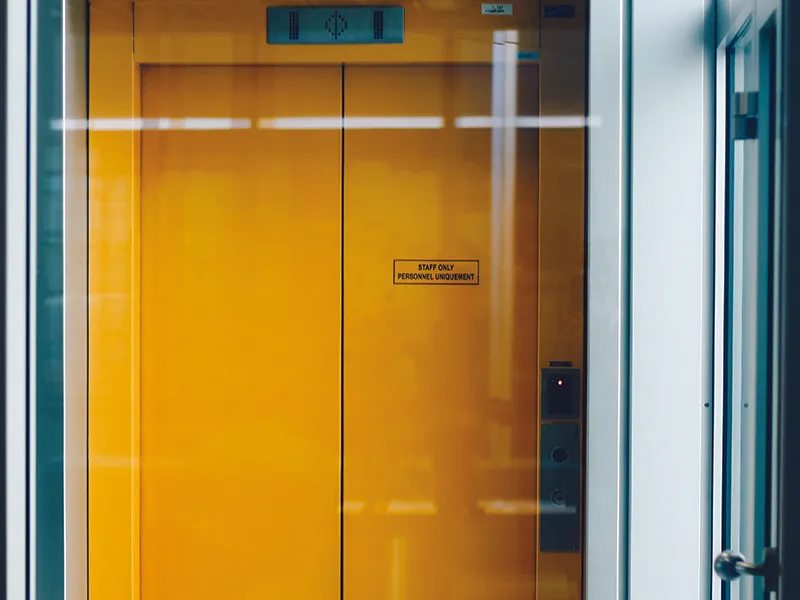
Elevators as vehicles for covid19 transmission have not been the first concern for which a technological solution has been sought. Within the realm of homeowner communities, digital actions have been implemented for this purpose. Notable is the emergence of different apps for managing and controlling capacity in community swimming pools. Also in other spaces such as community gyms and other sports facilities.
However, we already find technological applications to try to minimize the risk in elevator use. Notable is the Kone Remote Call app, which aims to call the elevator without having to touch the call button. The action is performed from the smartphone, which represents a considerable reduction in the risk of contagion through contact.
This same platform develops other modules such as Kone Advanced People Flow, which allows no contact with other people from the building door to the elevator. We are certainly in a stage of technological growth that is going to bring great advances.