

Fair Distribution of Common Areas in Residential Communities
The common areas of a residential community should be enjoyed by all the inhabitants of the community. However, how to use them fairly and equitably has always been a point of discussion where it is sometimes difficult to reach an understanding among everyone.
This problem worsens and becomes even more difficult following the arrival of COVID-19, which, as if that weren’t enough, has also conditioned the way things have been done up until now. The new regulations and recommendations regarding coronavirus safety require maintaining the so-called social distancing, as well as limiting the occupancy of community facilities. And this is where the fair distribution and right of use by property owners becomes more difficult.
What Are the Usual Common Areas in a Residential Community?
Clarifying which are the common areas of a residential community is the first thing we are going to do. Although in some cases it seems very obvious, there are occasions where this is also a cause of dispute. Therefore, having this clear is the first step to tackling the problem.
Among the usual common areas we can highlight: walls, facades, terraces, entrance halls, stairs, hallways, courtyards, wells, common premises, storage rooms, swimming pools, sports facilities, gardens, and elevators.
Also included are those areas intended for service supply, such as water and electricity supply, doorman services, etc.
Once the common areas are established, we will clarify that normally it is the communities, through the figure of the president, who are responsible for the management and distribution of these areas. However, due to the COVID-19 situation, this has changed. Although communities still handle the management, they now follow the rules and guidelines established by the competent authorities to minimize the risks of infection. Thus, if a resident wants to report another for failing to comply with health safety measures, they will have to do so before the authorities.
Common Areas in Residential Communities: Horizontal Property Law

Regarding the common areas of residential communities, many property owners wonder whether there have been modifications to the horizontal property law. In this regard, it is important to remember that any regulation issued by health authorities prevails over these laws, in case they were somehow in conflict. Otherwise, the horizontal property law maintains its validity and its value.
This law establishes a regime and a relationship and organization for the use and enjoyment of common elements among all property owners, as well as for their maintenance. Likewise, article 396 of the Civil Code can be consulted for any questions related to the matter.
It should be noted that this law allows for 3 fundamental aspects:
- It gathers all the basic rules and coexistence guidelines for the organization and enjoyment of common areas in a residential community.
- It grants a resident the right to make private use of said common areas, with the community’s authorization being mandatory.
- Guidelines for action in case of invasion of common elements, such as in the case of illegal construction work.
How to Manage and Equitably Control Common Areas?
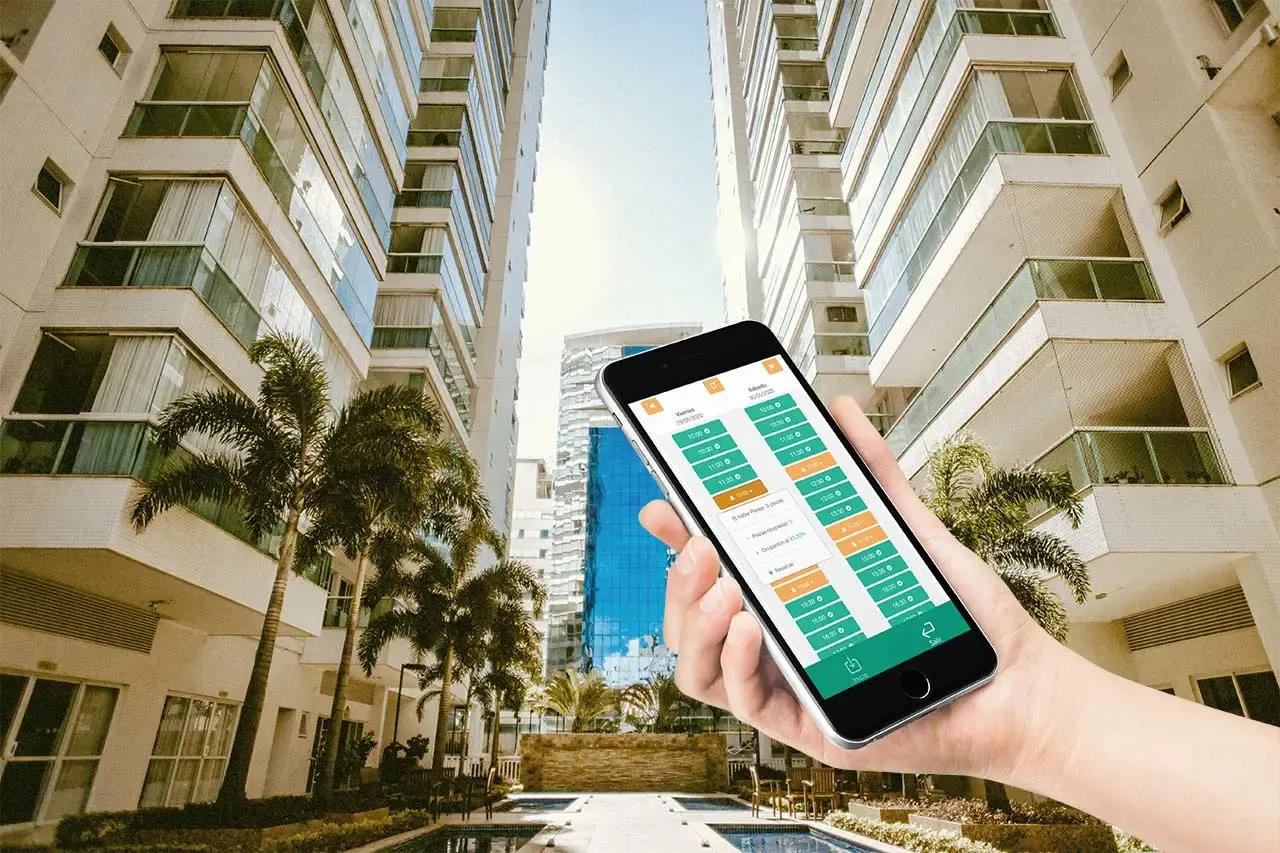
Manage shifts in the common spaces of your homeowners’ association
How to achieve fair distribution of common areas has become a priority in residential communities with the arrival of COVID-19. Occupancy control and stricter enforcement of schedules is a complicated task, but very necessary due to the importance of avoiding crowds to reduce the spread of the disease. Therefore, many property managers are turning to technological solutions that simplify the problem and provide a simple and quick solution.
One of the solutions best rated by users is the Reservar Zona Comun application. Compatible with any operating system on any mobile phone, it facilitates appointment management and real-time occupancy in common areas, so any resident will have access to occupancy data in a matter of seconds. Similarly, it will be much easier to establish shifts for the use and enjoyment of common areas. As added value, it adapts to the needs of each community, allowing customized time slots to be defined.
The application offers 2 plans, and also has a free 7-day trial version so that homeowners’ associations can evaluate their purchase.